

BUILDING A DIVERSE CLEAN ENERGY WORKFORCE OF THE FUTURE
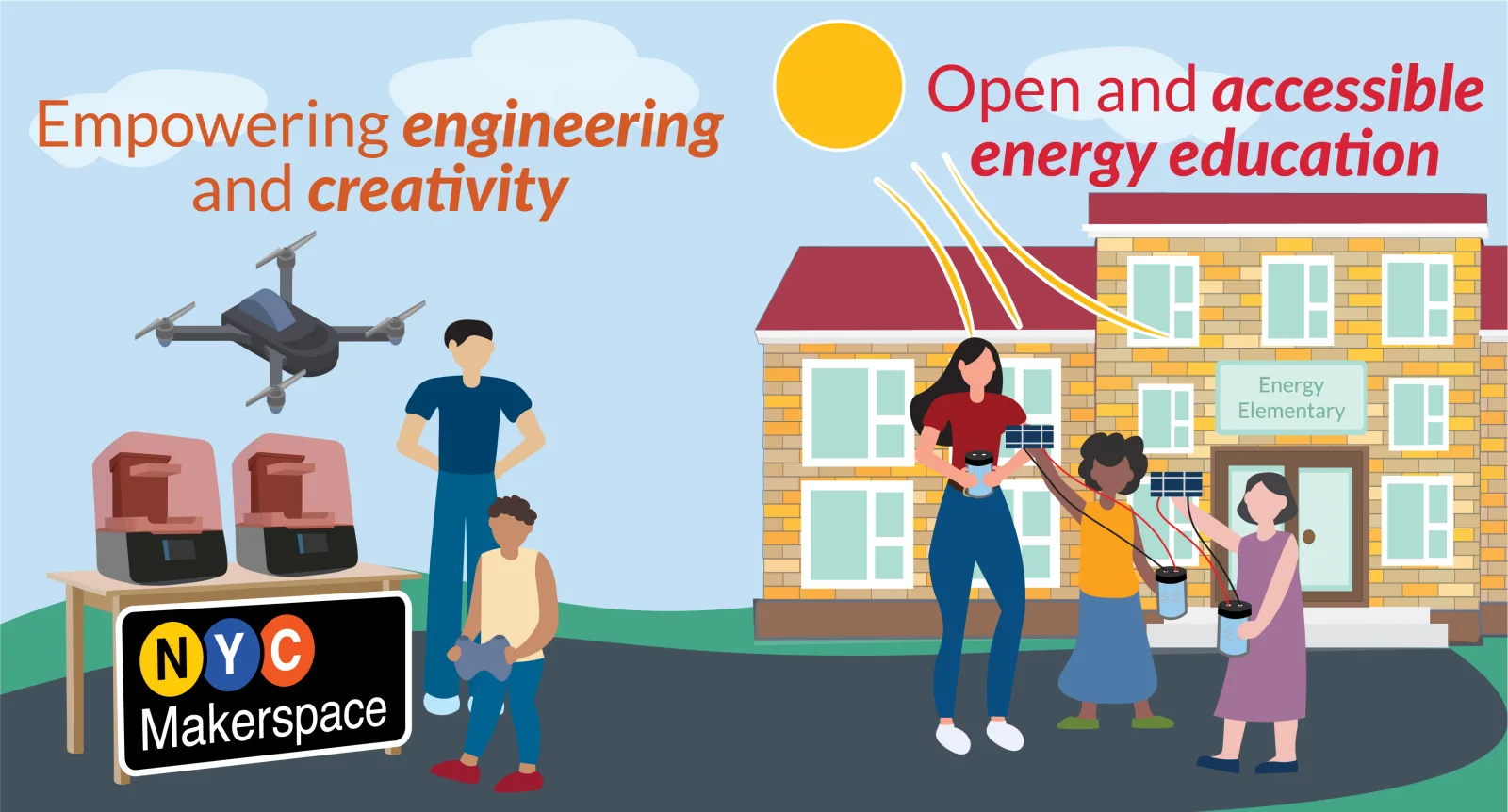
In the Bui Lab, the students we teach and mentor are our most lasting contribution. We give them a strong foundation in chemical engineering alongside the creative problem-solving and communication skills that carry across whatever careers they pursue. These principles extend beyond the walls of our group. We work to make science accessible for students who have not always had easy access to it, because a clean energy future has to be built by people from all backgrounds.

TEACHING
Strong teaching is central to how the Bui Lab trains scientists. As a teaching assistant at Columbia University and the University of California, Berkeley, Justin taught six different courses and worked with more than 500 students, and he mentored students in scientific writing and presentation through Berkeley's Amgen Scholars program. That experience shapes how the lab approaches both classroom teaching at NYU Tandon and day-to-day mentoring within the group. Selected testimonials from past students are available here.
Experiences
University of California, Berkeley
CBE250 (Graduate Transport Phenomena)
CBE150B (Mass Transport and Separations Processes)
Amgen Scholars Program (Scientific Communication)
Columbia University
CHEN4150 (Computational Fluid Dynamics)
CHEN3010 (Chemical Engineering Thermodynamics)
CHEN2100 (Material and Energy Balances)
ENGIE1102 (Introduction to Engineering Design)

OUTREACH
We see educational outreach as a core pillar of our team's work and that of the field of energy and electrochemistry as a whole, not as something separate from our research. Teaching young students about energy science, and watching them get genuinely excited about it, is some of the most rewarding work we do. In this vein, every member of the group takes part in at least one outreach effort a year.
As the lab gets started at NYU, that work includes:
Teaching hands-on energy science in K-12 classrooms, building on a fifth-grade solar water splitting curriculum we are extending to middle and high school students.
Inviting students into the lab so they can see how those lessons connect to real research.
Connecting with underrepresented students by attending conferences like NOBCChE and NSBE and giving talks at minority-serving institutions.
Mentoring students from minority-serving institutions through summer research in the group.

PAST OUTREACH PROJECTS
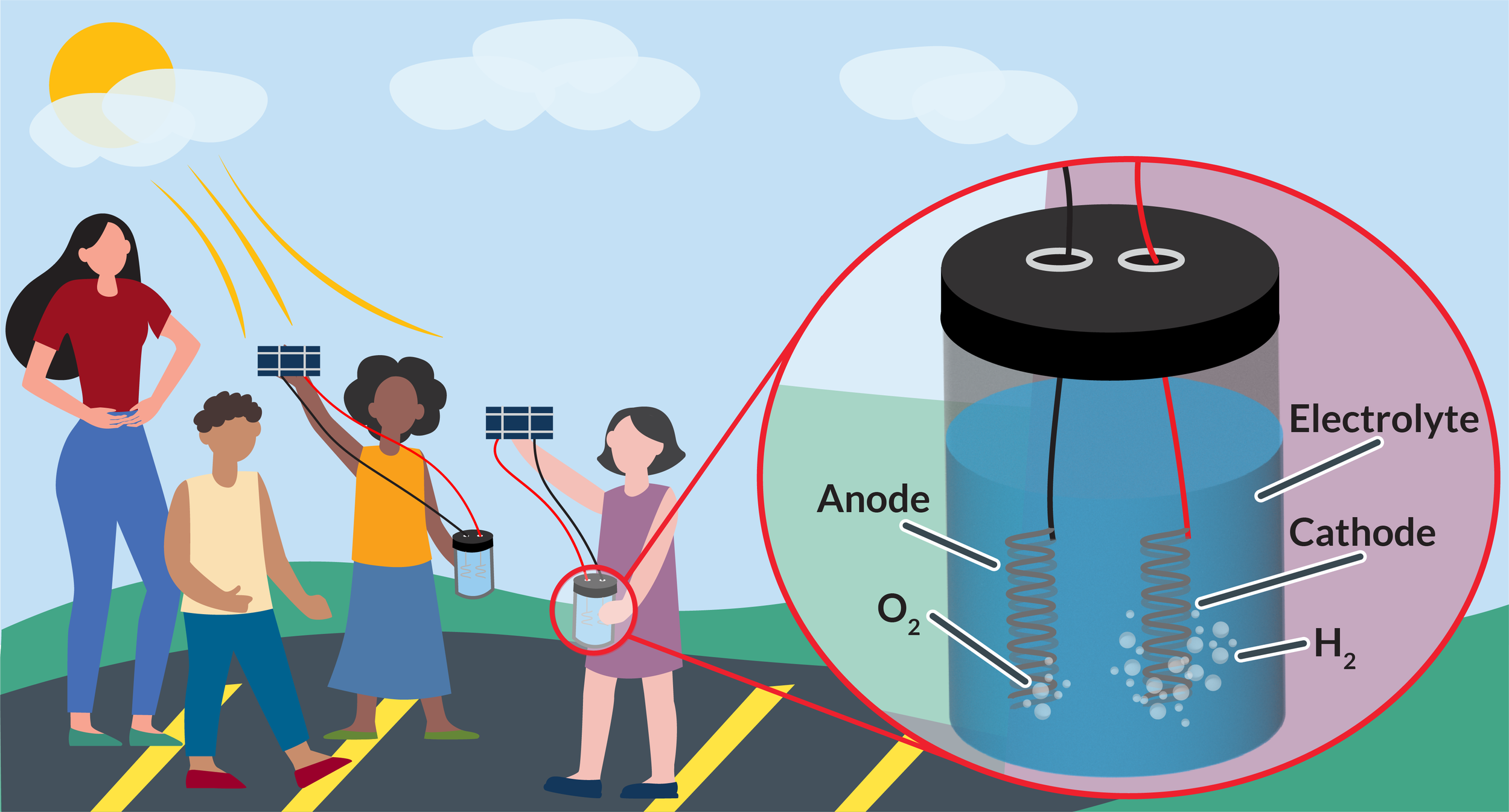
Working with local organizations, Justin and his mentees developed a lesson plan that introduces elementary school students to artificial photosynthesis. Students run a solar water splitting experiment using household materials and low-cost PV cells. The aim is to get young students from a range of backgrounds comfortable with electrochemistry early, when interests in science take shape. The manuscript is available at this link, and the lesson materials are at this link.
Artificial Photosynthesis Lesson Plans
Liquid Sunlight Alliance Sunrise Network Diversity, Equity, and Inclusion Co-Chair
The Sunrise Network is an advisory committee of junior researchers within the Liquid Sunlight Alliance (LiSA), a DOE energy hub. It works with LiSA leadership on career development, seminars, outreach, and diversity, equity, and inclusion. Justin co-led the DEI work, connecting local communities with the hub's research and creating more ways for scientists from underrepresented groups to take part in LiSA.
NYC Makerspace
Tools like 3D printers, laser cutters, and CNC machines have made advanced manufacturing much easier to learn, but their cost has long kept them out of reach for low-income students. NYC Makerspace opens makerspaces in recreation centers in partnership with the NYC Parks Department. During his time at Columbia, Justin helped build these spaces and developed and taught classes on computer-aided design and 3D printing.